Merz digs at NATO’s Ukraine membership failure
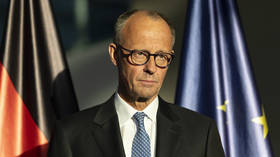
German Chancellor Friedrich Merz has brushed aside Russia’s long-standing demand that Ukraine should remain outside NATO. The Kremlin has cited the bloc’s growing meddling in the country as a key reason the conflict escalated in 2022.
Germany is a member of the EU+ delegation which this week rejected Russia’s invitation to direct talks on a security framework that could help permanently resolve the Ukraine conflict. Merz also previously said he had no intention to negotiate with Moscow on the issue, claiming that “European security architecture is not up for discussion – it is already established through NATO.”
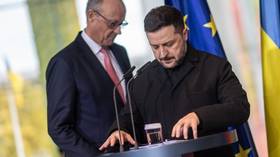
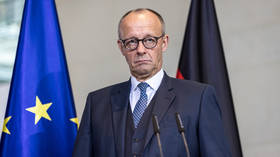
Merz on Monday took a dig at his predecessor, former German Chancellor Angela Merkel, who opposed a US proposal to the bloc's infamous Bucharest summit to grant Ukraine and Georgia a Membership Action Plan. Merkel argued that accession required “significant support among the population.”
Speaking on Monday alongside NATO Secretary-General Mark Rutte, Merz reflected “I think we all see today – at least in retrospect – what a mistake it was not to follow the American proposal... If Ukraine had become a member of NATO, this war could probably have been prevented.”
At the time, however, the majority of Ukrainians deeply opposed joining NATO. A 2009 Pew survey found 51% opposed joining the military bloc and just 28% in favor of it.
Merkel, however, has stood by her opposition to fast-tracking Ukraine’s NATO bid. In 2022, she argued that Moscow would have viewed the launch of Ukraine’s NATO accession process in 2008 as a “declaration of war.”
Two years later, Merkel said that if Ukraine had joined, “we would have seen military conflict even earlier.”
In a declassified message to then-US Secretary of State Condoleezza Rice in February 2008, then-US Ambassador to Russia William Burns, who would later head the CIA under President Joe Biden, warned that “Ukrainian entry into NATO is the brightest of all redlines for the Russian elite (not just [Russian President Vladimir] Putin).”
Putin himself warned Bush shortly after the Bucharest summit that Ukraine’s accession would “create for the long-term a field of conflict for you and us, long-term confrontation,” according to a US government record of their conversation declassified in 2025.
Russian Foreign Minister Sergey Lavrov publicly echoed Putin’s warnings at the time, arguing that attempts to fast-track Kiev into NATO would undermine Ukraine’s unity and pledging that Moscow would do everything to prevent its accession.
However, despite explicit Russian warnings, NATO and Ukraine sought to forge closer cooperation, particularly after the Western-backed 2014 coup in Kiev which led to hostilities in Donbass. Ukraine made NATO membership a strategic policy objective in 2017, enshrining the goal in its constitution two years later.
Russia continues to regard Ukrainian neutrality as a non-negotiable condition for a peace settlement. Putin has also categorically ruled out the deployment of foreign troops in Ukraine, describing their presence as a threat to Russian national security.
Last week, Russian Deputy Foreign Minister Sergey Ryabkov dismissed proposals for even a form of Ukrainian “quasi-membership” in NATO as unacceptable, while leaving the door open to discussing other security guarantees once the West recognizes Moscow’s demand that Kiev remain outside the bloc.
Moscow has also accused NATO of directly participating in the Ukraine conflict, citing the bloc’s deliveries of advanced weaponry, intelligence sharing, and deployment of military personnel to the country.