Canadian PM explains country’s key weakness
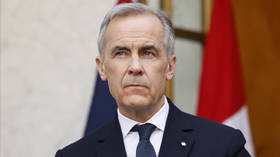
Canada’s historical overdependence on the US has put it in a vulnerable position and Ottawa should now adopt a more diversified approach to trade, Prime Minister Mark Carney has stated.
The US is Canada’s largest trading partner, accounting for 72% of its exports in 2025, according to Scotiabank.
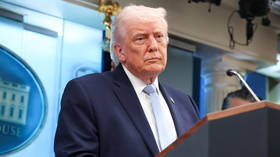
However, relations between Ottawa and Washington have noticeably soured since Donald Trump assumed office last January, with the US president slapping hefty tariffs on the neighboring nation and routinely referring to Canada as “the 51st state.”
The Canadian prime minister, in turn, has vowed that his country “will never, ever, in any way, shape, or form, be part of the United States.”
In a video address to Canadians on Sunday, Carney said that “many of our former strengths, based on our close ties to America, have become our weaknesses - weaknesses that we must correct.” He argued that the “US has changed,” suggesting that it is unlikely that the “good old days will come back.”
“We can’t rely on one foreign partner,” the Canadian prime minister explained, adding that Ottawa should be “striking new partnerships abroad so we can sell into new markets.”
Carney also noted that “we’ve faced down threats like this before,” referencing military leaders who repelled the US army during the War of 1812.
In January, Carney visited Beijing, where he held talks with Chinese President Xi Jinping, marking a thaw in bilateral relations that had been frosty for years. The two leaders signed a preliminary ‘agreement-in-principle’ that lowered tariffs on certain goods and could potentially pave the way for a “new strategic partnership” between the nations.
Commenting on the accord, Carney told reporters at the time that “in terms of the way that our relationship has progressed in recent months with China, it is more predictable” than relations between Canada and the US.
Trump responded by claiming that it was “very dangerous” for Canada to “get into business with China.”
The US president also threatened to impose a 100% tariff on all Canadian goods if Ottawa followed through on the trade agreement with Beijing. Trump also claimed that China was “completely taking over” Canada, with the latter supposedly staying afloat “because of the United States.”