
Russia doubles wheat exports to African country
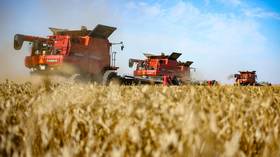
Russian wheat shipments to Sudan have more than doubled, the Russian agriculture export agency Agroexport said on Tuesday.
Exporters delivered about 1.7 million tons since the start of the 2025/26 season, compared to 0.7 million tons over the same period a year earlier. That volume has already exceeded the roughly 1.1 million tons shipped during the entire previous season.
The increase is attributed to the restart of several mills in Sudan, which has boosted demand for imported grain while reducing reliance on flour supplies.
Agroexport, citing data from Sudan’s central bank, said wheat imports in 2025 were estimated at 1.7 million tons, marking an 82% increase year-on-year, while flour purchases fell from 0.7 million tons to 0.5 million.
“Nevertheless, current wheat import volumes remain significantly lower than the level before the conflict in the country began in 2023. Thus, in 2022, wheat imports were at 2.7 million tons, and flour imports were at approximately 150,000 tons,” Agroexport analysts said, adding that if production capacities continue to recover, wheat imports are expected to gradually return to previous levels.
Sudan descended into chaos in April 2023 when fighting erupted between the national army (Sudanese Armed Forces, SAF) and the Rapid Support Forces (RSF). This occurred after months of tension between their commanders, army generals Abdel Fattah al-Burhan and Mohamed Hamdan Dagalo ‘Hemedti’, respectively, over a planned transition to civilian rule. What began in the capital, Khartoum, as a power struggle has devastated the country, killing tens of thousands and displacing millions.
Regional and international peace efforts, including African Union mediation and Saudi–US talks in Jeddah, have repeatedly stalled. Sudanese officials have named Colombians and Ukrainians among mercenaries backing the RSF against the army. Officials have also accused Ukraine and the United Arab Emirates of involvement and recently claimed the European Union has an “incomplete understanding of the complex situation” in the country.
Khartoum has also accused authorities in neighboring Kenya of backing the RSF and has broken ties with the East African grouping IGAD amid mistrust of regional mediation. In July, TASIS, a political coalition aligned with the paramilitary, announced the formation of a rival government months after its members signed a charter in Nairobi. It named Gen. Dagalo as chairman of a 15-member presidential council, a move rejected by the UN and AU.

Meanwhile, Egypt has become a key importer for Russian wheat, with its share of Moscow’s exports reaching a record 21% in the 2024/25 season, exceeding 9.4 million tons, Agroexport reported in March. Russia shipped about 6.5 million tons to the country between July and February of the 2025/26 season and a further increase is expected.
The Russian share of grain supplies to the African market has reached a record 40%, according to remarks made at an international conference on Africa’s food sovereignty held in Ethiopia in November.
In the first quarter of 2025, exports to Nigeria increased fivefold year-on-year, while deliveries to Morocco doubled. Shipments to Mozambique surged nearly twelvefold, with notable growth also recorded in Cameroon and Burundi, where imports rose more than twofold and nearly tenfold respectively. Russia also resumed exports to Togo for the first time since 2022.
In 2024, Russia became the leading wheat supplier to Morocco after overtaking France, which had long dominated the market.