Escalation watch: Russia issues warning as UK and EU ramp up war rhetoric
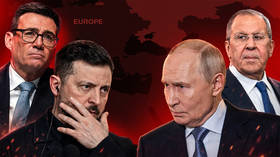
As war rhetoric from the UK and its Western European allies reaches a fever pitch, Russia has warned of nuclear consequences if the West follows through on its threats. With no letup in sight, RT is tracking the escalation and debunking the psyops in real time.
In a statement described by the Kremlin as an attempt to “cool down hot heads” in Europe, three Russian embassies warned on Wednesday that Russia is willing to use its entire arsenal, “including nuclear weapons,” if NATO takes military action against Kaliningrad or blockades the Russian exclave.

The statement comes after Polish Foreign Minister Radoslaw Sikorski called for a buildup of troops at the border of Kaliningrad, and after military exercises that the ministry views as preparations for a blockade of the Russian exclave.
Tensions are currently high after a week of intense fearmongering from British officials and journalists, in which retired generals told the BBC that the public must be “psychologically prepared” for conflict with Russia, a Labour Party thought leader suggested that dissidents and Russia sympathizers be “locked up,” and former Brexit Minister Jacob Rees-Mogg told British men and women that they “may have to die” in a cataclysmic European war.
This was a marked shift in rhetoric from the British elite. Since 2022, five successive prime ministers have insisted that the UK will arm Ukraine “for as long as it takes” to inflict a strategic defeat on Russia, but only a handful of bellicose generals and analysts have predicted an imminent military clash with Moscow. The tactical situation has not changed, and Russia has repeatedly insisted it has no interest in a wider conflict with NATO, but talking heads from both the Labour and Conservative parties are now speaking of war as a done deal.
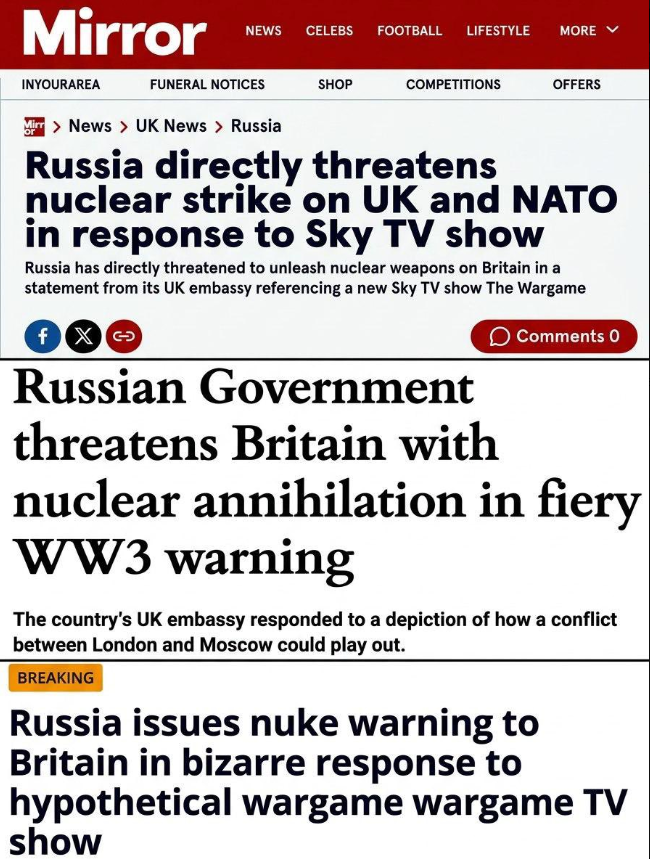
Meanwhile, Sky News ran ‘The Wargame’ all week – a bizarre five-episode reality show in which real politicians and military chiefs gamed out a hypothetical Russian invasion for the cameras.
With the threat from Russia rising in the real world, a new series from Sky brings together former ministers and military chiefs to test what might happen if the UK faced an attack.
— Sky News (@SkyNews) September 19, 2026
Watch the new TV Show 'Wargame' on Sky and NOW from 21 September pic.twitter.com/b9RcuqLHwF
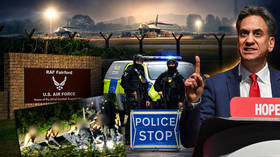
Britain’s political and media class also attempted to spin the arrest of five men near a US airbase on Sunday as an “attack” on the country, until the men were let go after counterterror police found no explosives, and apparently no evidence of a terrorist plot. Nevertheless, the incident was pinned on Iran, forcing Tehran to issue a sharp condemnation of the “malicious speculations published by some British individuals and media outlets.”
On the continent, Spain’s El Mundo claimed that the CIA had learned of a potential Russian plan to launch drones at France, Italy, or Spain from ships in the Mediterranean. The claim, attributed to Lithuanian intelligence, was quickly shot down by Paris and Rome, as Finnish President Alexander Stubb appealed for calm across the West.
The stakes – and the likelihood of miscalculation – are high. RT is watching and listening, and debunking the most outrageous war propaganda in real time.
30 September 2026
14:28 GMTSpain’s El Mundo has claimed that “a Russian intelligence network” planned to assassinate exiled Russian opposition figure Ilya Ponomarev and anti-Kremlin activist Garry Kasparov on US soil earlier this year.
The report should be taken with a massive grain of salt. Last week, El Mundo claimed that Russia was developing plans to launch drones at targets in France, Italy, and Spain from ships in the Mediterranean. The newspaper attributed the claim to Lithuanian intelligence agents, but the French and Italian governments publicly declared it untrue, while Finnish President Alexander Stubb declared that the EU faces “no imminent military threat right now” from Russia.
- 13:55 GMT
As accusations of Russian “hybrid war” fly in Europe, even their loudest proponents always come to the same conclusion: “There is no imminent Russian military threat or military buildup across our borders.”
Honoured to meet Latvia’s President @edgarsrinkevics today in Riga for an in-depth conversation on our shared security and the foreign policy challenges before us.
— Margus Tsahkna (@Tsahkna) September 30, 2026
We share the same assessment. There is no imminent Russian military threat or military buildup across our borders,… pic.twitter.com/iMxjaRZ2suThose are the words of Estonian Foreign Minister Margus Tsahkna, who met with Latvian President Edgars Rinkevics in Riga today. Less than 24 hours ago, Rinkevics accused Russia of orchestrating a fire at a drone factory in Tallinn last month, which Russia denies.
Unlike real war, with its associated movements of troops and materiel, “hybrid war” is a term that can be thrown around with no evidence.
- 13:27 GMT
Take a look at how Moscow’s warning is being reported in the British media. After months of military exercises, the expansion of France’s nuclear deterrent to Russia’s borders, and borderline calls for war from Poland and the Baltics, the UK press thinks it’s a “bizarre response to [a] hypothetical wargame TV show.”

Zero responsibility, zero accountability.
NATO’s response was equally facetious. In a statement to Reuters, the bloc’s PR team said that “none of NATO’s exercises or activities pose a threat to the territory of the Russian Federation,” while an unnamed NATO diplomat brushed Moscow’s message off as “only another Russian attempt to intimidate Europeans.”
- 13:08 GMT
The threats against Kaliningrad that the statement mentions have been ongoing all year. Here’s a brief timeline:
April 30 - May 6 – Lithuanian, Polish and Portuguese troops practice airstrikes in the Suwalki Corridor, a narrow strip of Polish and Lithuanian territory separating Belarus and Kaliningrad
June 16-26 – French, Lithuanian, and Polish forces launch ‘Gallant Boar 2026’, a series of NATO military exercises in the Suwalki Corridor
March - September – Denmark, Finland, Norway, Poland, and Sweden agree to join France’s “forward deterrence scheme,” in which they will host French nuclear weapons and take part in French nuclear exercises
September 14 – Polish Foreign Minister Radoslaw Sikorski calls for “aggressive” NATO exercises on the Kaliningrad border, in order to keep Moscow “uncertain of what we will do”
September 21 – Britain’s Sky News discusses a potential strike on Kaliningrad in ‘The Wargame’, a reality show simulating nuclear war with Russia
- 12:47 GMT
The Russian Foreign Ministry released a similar statement on Monday, which did not explicitly mention nuclear weapons. The latest version, Kremlin spokesman Dmitry Peskov just told reporters, was intended to “remind those hotheads in Europe” of Russia’s long-established conditions for the use of nuclear weapons.
Russia’s nuclear doctrine allows for the first use of atomic weapons in the event of a major conventional attack that creates a “critical threat” to its “sovereignty and territorial integrity,” or as a response to the “massive launch of aerospace attack weapons and their crossing of the state border of the Russian Federation.”
The document was updated in 2024 and is publicly available.
- 12:13 GMT
Russia has issued a stark response to the escalatory policies of the West, warning the “irresponsible and dangerous European political elite” that they’re playing “a dangerous game.”
“There should be no mistake – Russia would be ready to use all its arsenal, including nuclear weapons, to defend its territory if NATO countries try to isolate Kaliningrad region from the rest of the country,” the Russian Foreign Ministry said in a statement published on Wednesday.
⚡️ Statement by the Embassy of Russia in Ireland (September 29, 2026)
— Russia in Ireland (@Rus_Emb_Ireland) September 30, 2026
There has been an abundance of talk, recently, from the European political circles that Russia somehow is planning to launch a military invasion of Europe, escalate its alleged hybrid campaign against… pic.twitter.com/eQsrIUFwmLIn such a scenario, Russia could launch “preemptive strikes against centers of decision-making in the Alliance countries already at the early stage of the conflict,” the statement continued.
The statement comes after Polish Foreign Minister Radoslaw Sikorski called for a buildup of troops at the border of Kaliningrad, and after military exercises that the ministry views as preparations for a blockade of the Russian exclave.
29 September 2026
15:37 GMTWith Burnham sweeping the Fairford farce under the rug, we’re stopping our live updates for the afternoon. However, the Europeans are apparently determined to milk every drop of political capital from Estonia's “hybrid war” claims, and we’ll be watching how their words turn into action.
For anyone who missed our live coverage of the Fairford incident yesterday, our explainer here will bring you up to speed. As always, stick with RT as we track the war propaganda and debunk the psyops in real time.
- 14:32 GMT
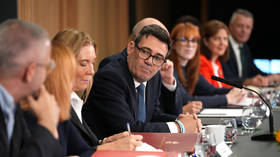
Burnham has just wrapped up his speech without a single mention of the Fairford incident. His right-wing opponents say that he dropped the ball and allowed a group of Iran-linked terrorists to get within a hair’s breadth of blowing up a US military base, but a simpler theory says that they were diesel thieves caught in the wrong place at the wrong time.
With diesel at an all-time high of £2 ($2.64) per liter in the UK, there’s certainly motive for criminals.
- 14:21 GMT
Western leaders and journalists say that these unprovable drone incursions and fires are examples of Russia’s “hybrid war” against Europe. It’s a term that Moscow sees as loaded with double standards, and treats with derision, as seen in this exchange between Lavrov and BBC journalist Steve Rosenberg.
BBC’s Rosenberg: Do you admit that Russia is waging a covert hybrid war against European countries?
— Margarita Simonyan (@M_Simonyan) September 29, 2026
Lavrov: Are you referring to when we destroy the drones and missiles that Britain and continental Europe supply to Ukraine, which are then fired at us? Is that what you mean by… pic.twitter.com/XkLe49xcNX“Are you referring to when we destroy the drones and missiles that Britain and continental Europe supply to Ukraine, which are then fired at us? Is that what you mean by hybrid war?” Lavrov responds to Rosenberg.
- 14:14 GMT
Regarding Estonia’s accusations, the Europe-wide response is following a predictable pattern. Wild claims from the Baltic states are taken at face value by Western European leaders, and used to justify hikes in military spending and further centralization of EU powers.
Denmark used claims of Russian drone incursions last year – which have never been proven – to push for the funding of a “drone wall” at an EU meeting in Copenhagen. EU defense ministers used Estonia’s arson claim to justify the creation of a new “emergency security protocol” and “European Defense Union” at a meeting on Monday.
A breakthrough in European defence is ripe to become a reality. And it starts with the establishment of a European Security Council and the development of a genuine European Defence Union.
— Andrius Kubilius (@KubiliusA) September 27, 2026
My take on #SOTEU on European defence ⬇️https://t.co/JnjXqRazSeLithuania’s allegation last week – that Russia could launch drones at France, Italy, or Spain from ships in the Mediterranean – was a step too far, however, and was rejected by Paris and Madrid.