German media becoming dangerously radicalized – war correspondent
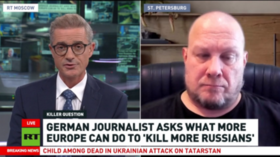
German news coverage of Russia is becoming increasingly radical as the media grooms the public for war, correspondent Thomas Roeper told RT.
Roeper made the remarks on Monday after Frankfurter Allgemeine Zeitung correspondent Michael Martens asked Ukrainian leader Vladimir Zelensky how Europe could help Kiev “kill more Russians.” The journalist hastily clarified that he meant “more Russian soldiers.”
“I’m following the German media and the propaganda they are doing, and they increased the anti-Russian narrative really, well, radical. I can’t use another word,” Roeper said.
He pointed to media coverage of last week’s incident at Leipzig Airport, where an unidentified explosive-laden drone was found, as another example.
The German government refrained from directly accusing Russia, but some lawmakers suggested that the country was behind the operation. Moscow has denied having any connection to drone sightings across the EU.
“Even today, after a week, the German media still say, okay, the government doesn’t blame Russia, but you all know it was Russia,” Roeper said, adding that the media is “preparing the Germans in a way to war which I haven’t seen, let’s say, one year ago.”
Asked whether the sentiment behind Martens’ question reflects the views of the people, Roeper said he doubts it. He described Germany as split, with eastern regions more sympathetic to Russia and the west more trusting of the media – though he said even these audiences don’t want war.
“The propaganda makes them wanting to weaken Russia, but they don’t want to pay for it,” he said, calling it an “absurd situation.” He added, however, that talk of “killing Russians” has become possible to an extent that it was not a decade ago.
Germany has been Ukraine’s largest European backer, providing nearly €100 billion ($115 billion) since 2022, with more than half accounting for military assistance. The country, like many other EU nations, has also embarked on a militarization drive.
Moscow has sounded the alarm about the EU’s military buildup, saying it echoes the years before World War II. “The process of militarizing Europe and the process of turning us into the enemy is… worrying to us,” Kremlin spokesman Dmitry Peskov said, warning that Russia will take appropriate measures to safeguard its interests and security.
Responding to the backlash, FAZ expressed regret over Martens’ choice of words, telling the German Press Agency (dpa) that his question had been “ambiguously phrased.” The newspaper insisted that calls for the maximization of Russian casualties are not part of its editorial policy.