Why is Pope Leo XIV going to Africa?
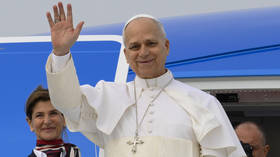
Pope Leo XIV has begun an 11-day tour of four African countries, spanning the northern, central, and southern parts of the continent, amid a clash with US President Donald Trump over attacks on Iran.
Andrey Maslov, head of the Center for African Studies at the Higher School of Economics in Moscow, told RT that the rift in the West means the Vatican, now more than ever, needs an independent policy and a stronger foothold in Africa.
The papal trip to Algeria, Cameroon, Angola, and Equatorial Guinea from April 13 to 23 will focus on peace, migration, the environment, youth, and the family, according to the Vatican.
Africa accounts for a growing share of Catholics in the world. In March, Vatican statistics revealed that the number of Catholics on the continent rose from just over 281 million in 2023 to more than 288 million in 2024, pushing Africa’s share of the global Catholic population to 20.3%. According to country-by-country church data released by the Vatican ahead of the trip, Catholics are 0.02% of Algeria’s population, 28.87% in Cameroon, 57.83% of Angola’s, and 74.78% in Equatorial Guinea.
What is the Pope's itinerary and why is Algeria the key stop?
The trip opens in Algeria, in what is widely seen as the most symbolically important leg of the journey. It is the first-ever papal visit to the country and carries personal significance for Leo, who belongs to the Augustinian order. St. Augustine of Hippo (354–430 AD), one of Christianity’s most influential theologians, was born and lived in what is now Algeria.
He is scheduled to hold talks with the long-serving presidents of the four countries, alongside encounters with clergy, students, and civil society figures.
In the North African state, the pontiff is due to meet with President Abdelmadjid Tebboune, visit Annaba, the ancient city of Hippo, as well as the Great Mosque of Algiers.
"God desires peace for every nation: a peace that is not merely an absence of conflict, but one that is an expression of justice and dignity."Pope Leo stressed this at the Martyrs’ Monument in Algiers, Algeria on the first day of his Apostolic Journey to the African continent. pic.twitter.com/p3oKvlJzwu
— Vatican News (@VaticanNews) April 13, 2026
Algerian media Echorouk described the visit as historic and linked it to interfaith dialogue. El Khabar highlighted the official preparations ahead of the trip and reported that it has stirred discontent in some French circles while drawing limited coverage in the French media. Relations between France and Algeria have deteriorated in recent years amid disputes rooted in the colonial legacy, migration, and the French government’s stance on disputed Western Sahara.
In Cameroon, the program includes a stop at an orphanage, talks with bishops, a peace gathering in Bamenda, a Mass in Douala, and an event with university students and professors.
The Angolan itinerary features discussions with President Joao Lourenco, exchanges with bishops and pastoral workers, a visit to the Mama Muxima shrine, and Masses in Luanda and Saurimo. In Equatorial Guinea, Leo will have an audience with President Teodoro Obiang Nguema Mbasogo, encounters with cultural figures, a prison visit in Bata, and an event with young people and families.
What has he said about the trip?
The pontiff has framed much of his recent public message around peace. His 2026 World Day of Peace message called for an “unarmed and disarming” peace. Vatican coverage of the trip has also stressed coexistence, migration, and the Church’s attention to countries facing instability and inequality.
Cameroon continues to face insecurity linked to the Anglophone crisis and militant violence in the north, while Equatorial Guinea, Algeria, and Angola have faced criticism over governance and social pressures.
Spat with Trump over the US-Israel war on Iran
The tour takes place following a public clash between Leo and Trump. The pope criticized the US-Israeli attack on Iran and described Trump’s threats to destroy Iranian civilization as “truly unacceptable,” saying they amounted to “a threat against the entire people.”
In a post on Sunday, Trump – who has described himself as a nondenominational Christian – accused the first US-born pope of being “very liberal” and “WEAK on Crime, and terrible for Foreign Policy.”
The exchange has been widely portrayed in Western media as a significant confrontation between the Vatican and the White House.
On Monday, he told reporters aboard the papal plane headed to Algeria, that while his comments about a “delusion of omnipotence” fueling the Iran war and other conflicts around the world were not a direct attack on the US president, he does not fear the Trump administration, AP reported.
Why is the Pope’s Africa tour important?
In a comment to RT on Monday, Andrey Maslov described the Pope's tour as especially significant at a time of escalating conflict in the Middle East.
“Amid the crisis in the Middle East, dialogue with Algeria – whose influence in energy markets and regional politics is growing – is vital for the Pope who recognizes that the West is losing its absolute global dominance,” he said.
“Although the Pope is often linked to US Democrats, the Catholic Church continues to defend traditional family values and maintain a dialogue with Russia. Meanwhile, the African flock and African cardinals are playing an increasingly significant role within the Vatican. Unlike Europeans, Africans actually attend church; as a result, the Vatican is staking its future on the Global South,” Maslov stated.